
TX Elections: More Screwed Up Than You Think
The current narrative says Republicans are to blame for a botched primary, but it's more complicated than that.


“Us Against Them”
Our Favorite Type of Story
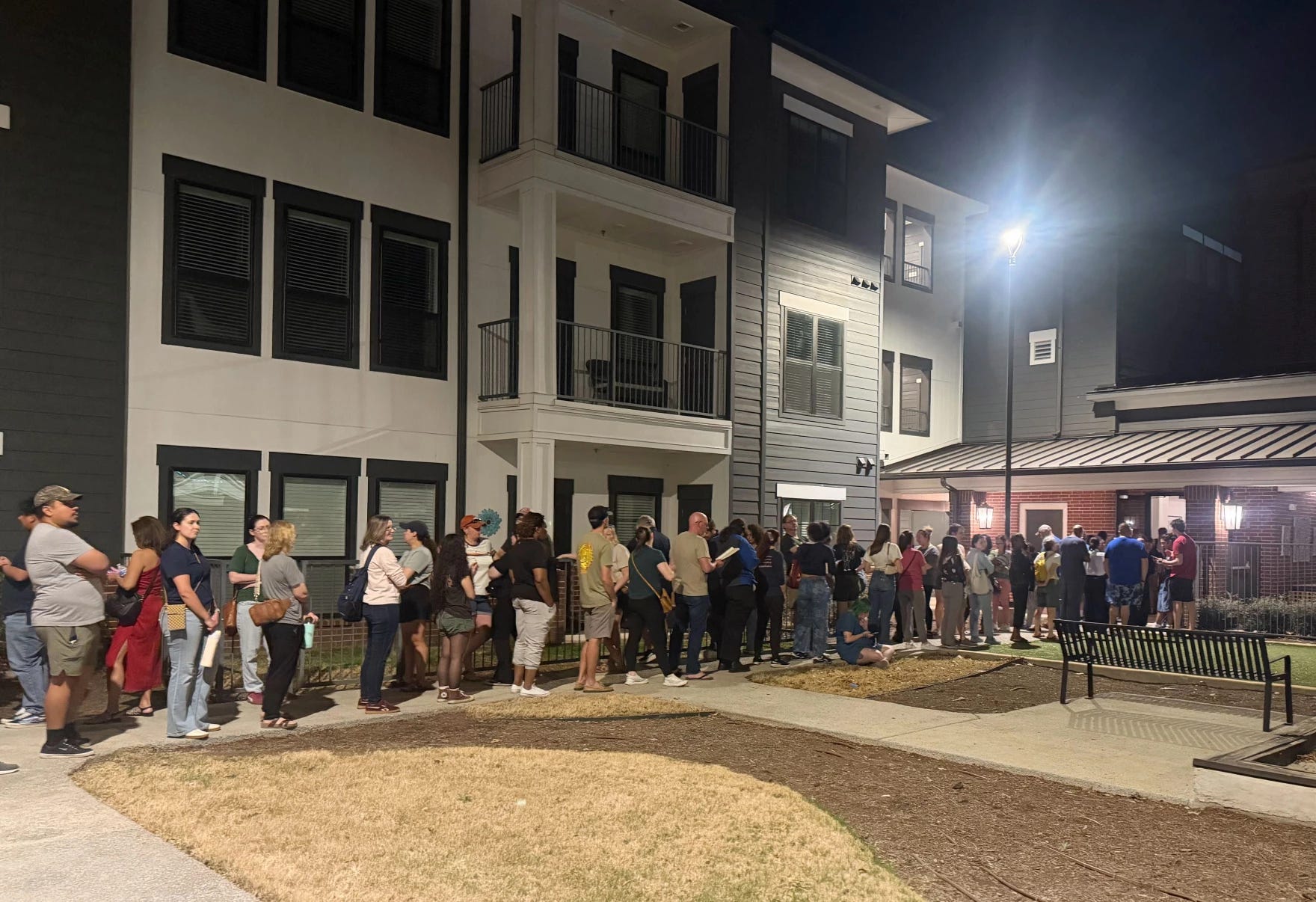
When The Texas Civil Rights Project, Common Cause Texas, URGE and DeedsNotWords meet today at 6pm CDT, there will likely be a clear narrative at the meeting, regarding the “massive disruptions” that voters experienced in Williamson and Dallas County Texas during and leading up to the March 3rd primary this year. No doubt, it will mirror the narrative from this April 29th, 2026 Votebeat Texas article that states unequivocally, “Nearly everyone seems to agree on who’s to blame: the Williamson County Republican Party.” Votebeat and other progressives have reached a consensus that the confusion and chaos of voters waiting in long lines to vote, not always having the supplies available to cast a vote, and in some cases not even knowing where to vote, was due to Republicans in Dallas and Williamson County deciding to hold their own primary on Election Day, instead of letting the county election administrator run a county-wide primary on that day. County-wide voting, where voters can vote at most or all county locations, has become the norm in Texas. Voters were surprised by, and not well-informed about the Election Day voting change.
“Clark Meyer, who served as an election judge on an Election Day judge, said, ‘About 50% of the folks that came in mentioned that they had already been to another place. Some of them had been to two other places, and — bless their heart — one person had been to four places.’" (KUT News)
Williamson County
A Hornet’s Nest of Technical Troubles
If that narrative dominates the meeting, it will be unfortunate. Because the chaos, voter disenfranchisement and frustration that was on full display in the March Texas primary was years in the making.
There are long-standing complex technical issues in Texas elections and finding a good scapegoat to blame for the current fiasco is not going to solve them.
In this article, we are going to focus largely on Williamson County, because we have a direct contact there, Lori Gallagher, a long time election integrity activist, who has supplied considerable documentation of the many technical issues that have occurred in the last few election cycles in Williamson County. Ms. Gallagher says that these issues were happening frequently in Dallas County as well. She says that these issues propelled Republicans in the two counties to try to have at least one day when the voting could be conducted in their own precinct, instead of using the county-wide system that has repeatedly failed them technically.
The evidence supports Ms. Gallagher’s narrative.
Here are a few of the technical issues that Williamson County has faced:
“Unrecoverable Election Screwup in Williamson County TX” was the title of a 2024 blog post by Former Princeton Computer Science Professor Andrew Appel. The article documents how Tenex epollbooks in Williamson County printed the wrong ballots for voters throughout the 2020 election, allowing voters to vote for candidates they had no legal right to vote for, and preventing other voters from exercising their constitutional right to vote for their own candidates and ballot measures. Appel says, “Tenex’s e-pollbook malfunctions call into question the results of the 2020 school district races, municipal elections, potentially a county commissioners race, and state legislative races in Williamson County.” He calls the mistake, “unrecoverable.” The problem persisted from Early Voting through Election Day.
Professor Appel describes the situation in Williamson County as “a train wreck.” He details how it happened again in 2022, possibly calling into question the results of a U.S. Congressional race. And he adds that the Williamson County election administrator did not even mention the problem to a judge when he was required to go to court about other technical problems that were happening in Williamson County elections. So the problem was repeatedly brushed under the rug and received what Appel refers to as a “band-aid fix.”
The Tenex epollbooks, despite exhibiting these serious performance issues, is still in use in Williamson County. Eventually the Secretary of State decertified a different epoll-book, one from ES&S. According to a 2024 letter from the Texas SOS, the ES&S pollbook had technical issues that mirrored the Tenex issues including, “errors that caused some voters to receive incorrect ballot styles … and a general failure to provide notification to poll workers of errors in workflows or with peripheral devices.”
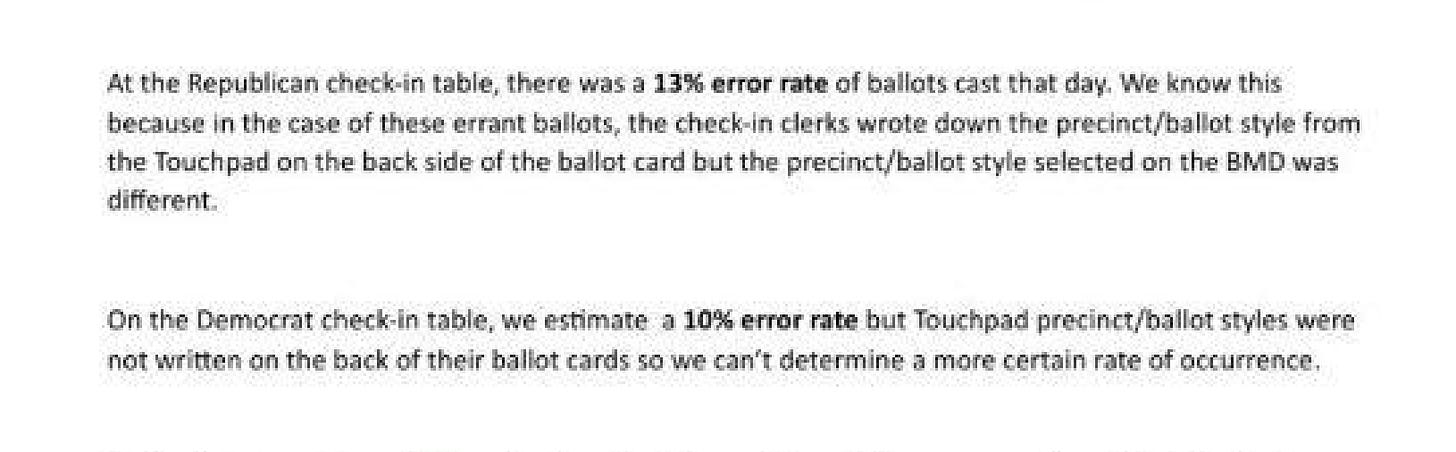
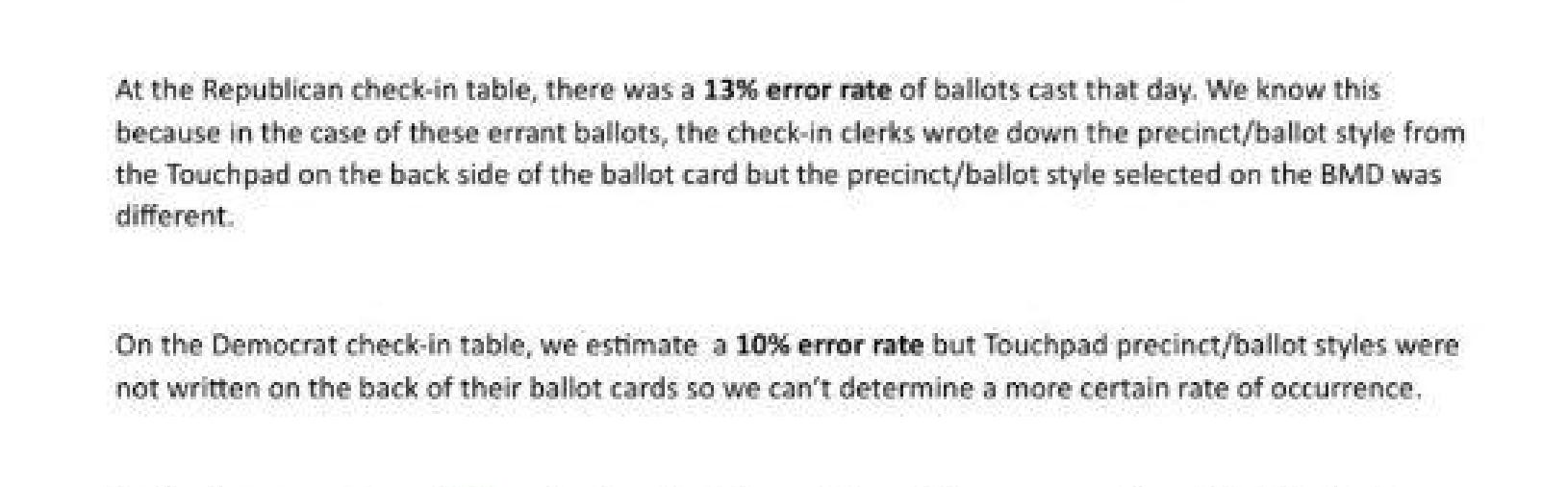
During this time, there were other serious issues with election equipment in Williamson County. A 2022 email from the Williamson County Election Administrator acknowledges that there was a 13% error rate of ballots cast that day at the Republican check-in table and a 10% error rate of the ballots cast at the Democratic check-in table.
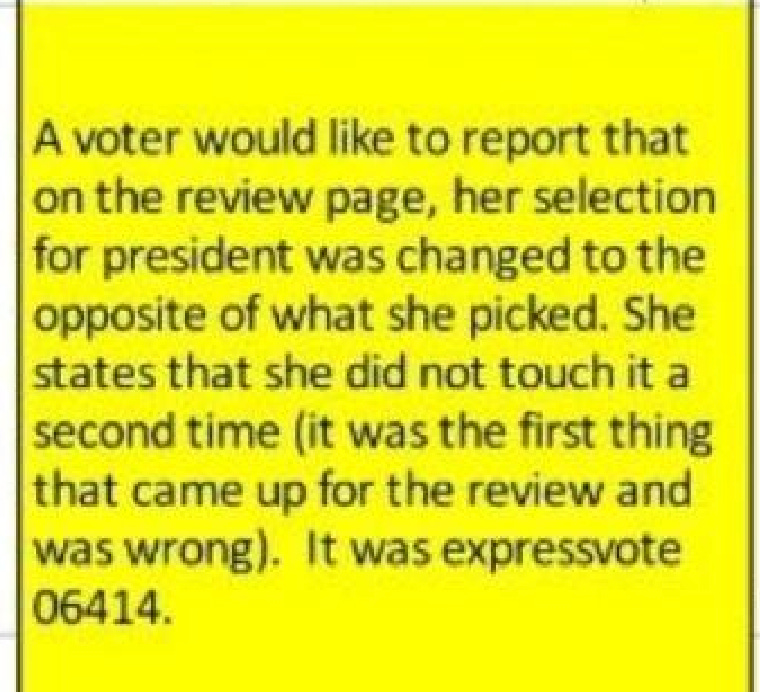
There were frequent reports that the touchscreen voting machines were out of calibration and selecting candidates other than the ones that voters were trying to vote for.
Meanwhile, as late as the day before Early Voting for the March 2026 primary was to begin, county election officials warned the Texas Secretary of State that the TEAM (Texas Election Administration Management) was malfunctioning on a daily basis. Their letter states,
“Counties face daily challenges with TEAM’s core functionality. For example, processes such as voter registration status lookups, precinct assignments, and ballot issuance have continued to malfunction frequently.” Their letter reads like a prophecy stating, “With significantly higher voter turnout in the primary than in the November constitutional election, the potential impact on voters is magnified.”
Secrecy of the Ballot In Question
Another problem festering below the surface of Texas elections is the troubling information contained in a detailed legal declaration by computer security expert Dr. Walter Daugherity.
Dr. Daugherity says in his declaration that it’s possible to track the way that as many as 60,000 voters specifically cast their votes in Williamson County, by following the ballot tracking number that is assigned to each person’s ballot.
Dr. Daugherity says in his declaration that the ballot tracking number “may be used to connect the voter to the voter’s ballot without the voter’s knowledge or consent.”
This was extremely troubling to Republicans in Williamson County and they wanted a way around this issue as well as an escape from the barrage of technical issues they were experiencing from their epoll books and voting machines.
One Day of In-Precinct Voting
Texas law allows for political parties to choose how they hold elections. The solution Williamson and Dallas County Republicans hit upon was that for one day, Election Day, they would move away from county-wide voting, which requires electronic poll books and try going back to locally-controlled, precinct-based voting, which they hoped they could conduct on a smaller scale, using less technology. KUT News quotes Williamson County Election administrator Bridgette Escobedo as saying, “[they] opted not to use the ballot-on-demand system and ballot-marking devices, but rather pre-printed, sequentially numbered, hand-marked paper ballots that were collected in boxes and centrally counted.”
They felt that with over a week of Early Voting, there was ample opportunity for those who wanted to vote in the county-wide system to do so. And having one day of in-precinct voting would allow them the opportunity to vote in a way that they hoped could preserve the secrecy of their ballot and avoid some of the technical nightmares they have been experiencing.
Ms. Gallagher said in a statement to SMART Elections, “There is no system better than voting with your neighbors. People who know each other, who share a community, counting ballots together - openly, transparently, accountably. That is what the Texas Constitution envisions, and that is what precinct-based, hand-counted paper ballots on Election Day deliver … and the coordinated opposition from vendors, election administrators, the Secretary of State, and even elected Republicans tells you everything you need to know.”
Suspected Sabotage
Ms. Gallagher says that the voting machine vendors prefer the county-wide system of voting for a number of reasons. Obviously, if more technology is involved, those are greater sales numbers for them, and they are uneasy at the prospect of counties moving back to less technical election set-ups that will eat into their profits. Additionally, the elections are so complex that counties are very dependent on the vendors to run the elections and that leaves vendors with a great deal of control over Texas election administration
Ms. Gallagher believes that vendors, collaborating with certain election administrators, deliberately orchestrated separate Democrat and Republican locations on Election Day - as well as a shortage of voting machines. This inherently led to long lines, and also turned into complete chaos, when Democrats and Republicans were each sent to the other’s voting locations.
Gallagher is adamant that there was no need to have separate Republican and Democratic locations and that had each polling location housed both the Democrat and Republican primary most of the confusion would have been eliminated. She is furious that the election administrator did not fully utilize the 150 voting machines that public records requests later revealed were available and instead limited the county to 100 voting machines. The low inventory of voting machines combined with the confusion about locations doomed voters to the miserable experience they suffered through. However Ms. Gallagher argues the pain was intentional on the part of the administrators, in order to kill the idea of precinct-based voting. She says, “Had we all shared locations, like we did during in-person Early Voting, the chaos and confusion would have been non existent. I believe the conditions were manufactured to cause a public failure, in order to push and protect county-wide voting and the use of touchscreen voting machines.”
Solutions
What’s required to solve some of these entrenched issues is cooperation across political ideologies.
Transpartisan solutions include:
Actual investigation of what is causing both technical failures and voter disenfranchisement.
Election officials being held accountable to make changes that will address, technological problems, make it easier for voters to vote, and improve voter morale.
Follow up to see whether those changes are helping and what adjustments still have to be made.
Please Donate & Subscribe

We have a better understanding what happened in the 2024 and 2020 elections, as we put protections in place for the 2026 midterms. If you find our work valuable, please subscribe and make a donation as well! All donations are tax-deductible.
Thank you to the generous supporters who have helped us get off to a great start in our midterm fundraising!
We are raising $500,000 in order to roll out full protection for the midterms. We’ve raised over $70,000 for this program and we ask you to do your part. So please go to SMARTelections.us, or use the QR code below, and make a donation.

Each $50 you donate provides the recruiting materials, training, software, mentoring, support & follow-up for one observer.
Anything that you can afford is greatly appreciated, and thank you for all that you do.
We appreciate you.
Think for yourself, or others will think for you without thinking of you.
~ Henry David Thoreau
 | A guest post by
|
Texas is governed predominantly by Republicans, and have for some time (although some Democrats are scattered here and there). Seems like any problems in the making are the fault of those who have governed and make decisions during those times? Whether it be the decisions on the process, tools/technology, vendors etc..